Learn the method in under 30 minutes of total watch time.
From the people who learnt it first.
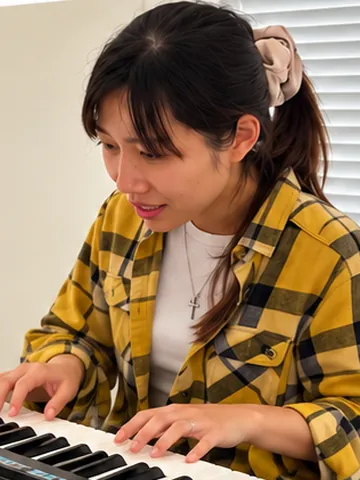
“I learnt so many chords but could only play one or two songs. Now I can play any song I want.”
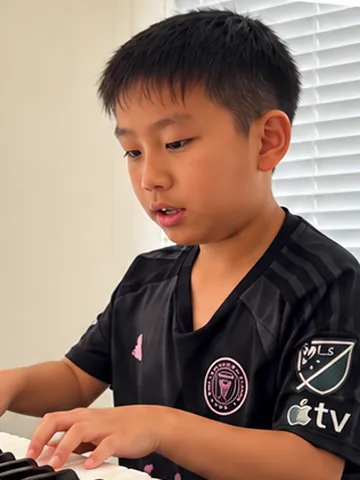
“Satoshi went for piano lessons but didn’t enjoy them. Now he plays and sings.”
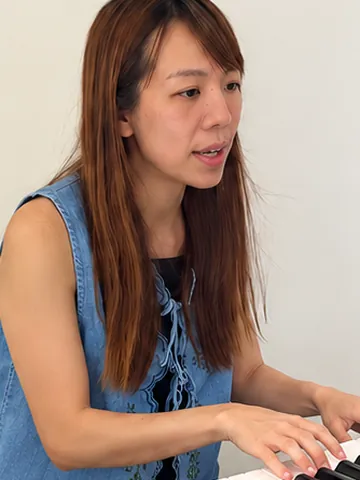
“I took Grade 7 piano, but I was stuck playing notes and classical music. Now I can finally sing while playing the piano!”
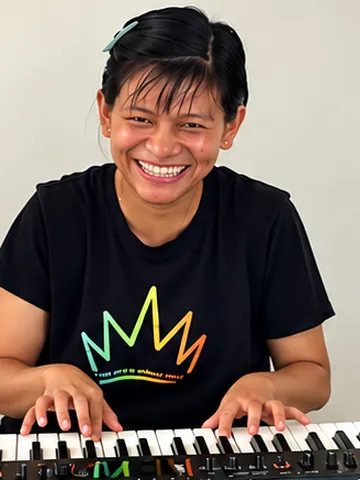
“I gave up guitar because it hurt my fingers. But with this method, I was able to play along with a song after my first lesson.”
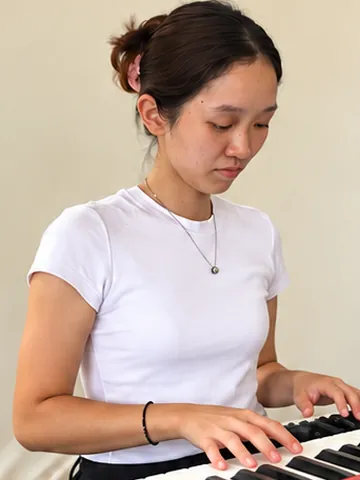
“I tried learning piano online by myself, but gave up multiple times. With this method, I can finally worship freely on the piano!”
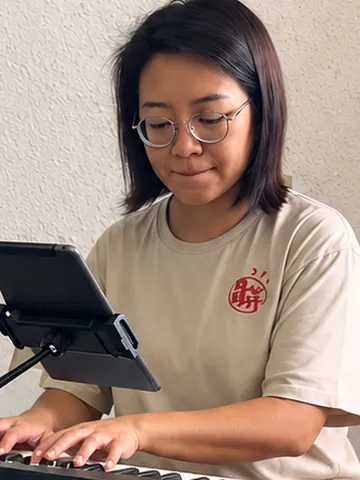
“Because of this method, I led worship on the piano for the first time in my life.”
How many times have you sat at the piano and tried singing while playing, only to end up thinking about the key, which chord comes next and the lyrics? And you're so afraid of the embarrassment of playing a wrong note that you don't dare sing and play in front of anyone.
Or maybe you started learning piano because you dream of performing on stage, or just want to enjoy being your own karaoke machine, but you got bombarded by all the notes, theory, scales and fingerings.
The 3-Finger Piano Method was developed specifically so you can focus on what matters: singing.
Developed by Pastor James while training complete beginners to become worship leaders in a church plant in Okinawa, Japan.
If you want to sing confidently while playing the piano, this is for you.
This isn't really a piano course for people who dream of becoming pianists.
It's for the person who thinks:
"I just wish I could accompany myself."
Maybe you sing around the house.
Maybe you love karaoke.
Maybe you record covers.
Maybe you're always searching YouTube for backing tracks.
Maybe you sit near a piano and wish you could just put something underneath your voice.
But learning piano feels like an entirely separate hobby.
What if you didn't need all of that before you could start?
The breakthrough came when I stopped trying to teach beginners everything.
I'm James.
I've played music for years, and I'm also a pastor and church planter in Okinawa, Japan.
I originally developed this method because I was training complete beginners to become worship leaders in my church.
The problem was simple.
Some people could sing.
But they couldn't accompany themselves.
Traditional piano training could eventually solve that problem.
But I needed something they could use much sooner.
So instead of asking:
"What should a beginner pianist learn?"
I started asking:
"What is the least amount of piano a singer needs to support a song?"
That question changed everything.
Three fingers. Four chords. That's the starting point.
Your voice is the main character.
The piano is there to support it.
So we deliberately make the piano simple.
Copy my hands.
Right hand: two fingers
It stays in one place.
Left hand: one finger
It moves between:
C, F, G, Am
You don't need to understand why yet.
Tap a chord to hear it. Watch which finger moves.
Understanding can come later.
And what about all those impossible chords online?
You've probably seen them. You search for a song you love and suddenly the screen says:
And you think:
"Never mind."
That is exactly what the included AI tool is for.
Copy. Paste. Simplify. Play.
- Take the chords you found online, or upload a screenshot.
- Give them to the included AI Chord Simplifier prompt.
- Get a beginner version using C, F, G and Am.
The same song, simplified
The sophisticated version can wait.
Playability beats perfection.
Learn the sophisticated version later. But first, finish the song.
The first 20 people to sign up this month get a free 30-minute Zoom consultation to help them get started.
Get the courseThe shortest practical route from "I'm not confident" to "One more song? Sure!"
Five video lessons, under 30 minutes of watch time in total.
Copy my hands
Your right thumb and pinky stay on the same notes whatever the chord. Your left hand changes with the chords.
Practise with me
Train your left hand to move without constantly searching.
Make it flow
Add the sustain pedal and keep a steady beat.
Play along
Practise with a real recording before coordinating singing and playing.
Play the songs you want to lead
Simplify the chord sheet and play.